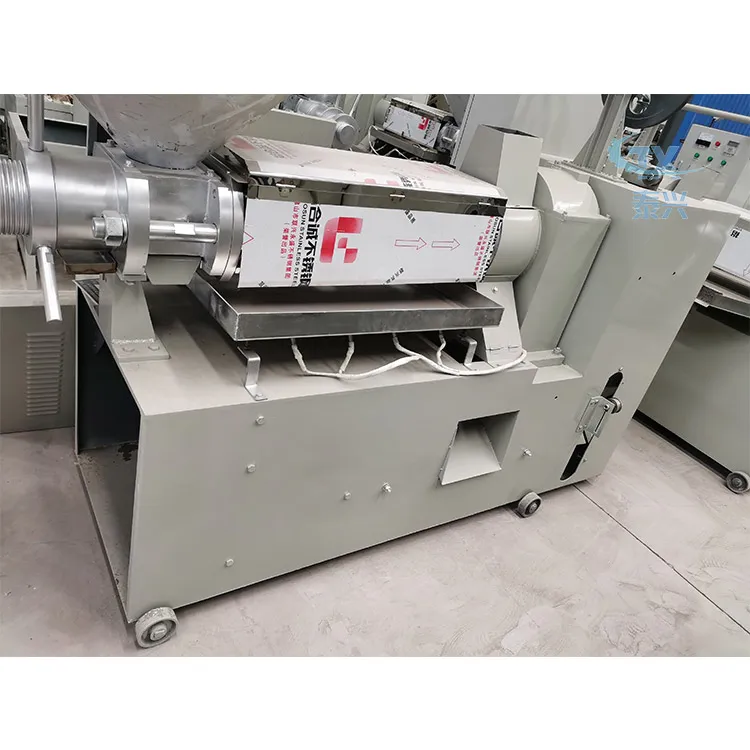
Cold Press vs Hot Press: Optimizing Yield and Quality Across Peanut Feedstocks
A technical review of QIE Group’s fully automatic peanut oil production line, focusing on cold- and hot-press strategies, refining integration and international compliance for Southeast Asian, African and Middle Eastern markets.
Fundamental technical differences and why feedstock matters
Cold pressing preserves flavor and nutrients by keeping pressing temperature below 60–70°C, typically delivering oil yields of approximately 40–45% for average-grade peanuts (oil content 45–52%). Hot pressing includes seed conditioning (roasting/steaming) and raising pressing temperature to 90–120°C, improving oil liberation and reaching 47–50% yield on similar feedstock. The optimal choice depends on peanut variety, moisture, pre-cleaning quality and market requirements:
- High-oil varieties (≥50% oil content): Cold press can be competitive for premium edible markets—preserves aroma and nutritional markers (tocopherols, phytosterols).
- Lower-quality or mixed-size feedstock: Hot press + conditioning often yields higher extraction rates and lower residual oil (<3% in cake after mechanical pressing).
- High-moisture seed (>10%): Pre-drying recommended; uncontrolled moisture reduces pressing efficiency and shelf life.
- Foreign matter and shells: Robust cleaning and dehulling upstream improve extraction and reduce wear.
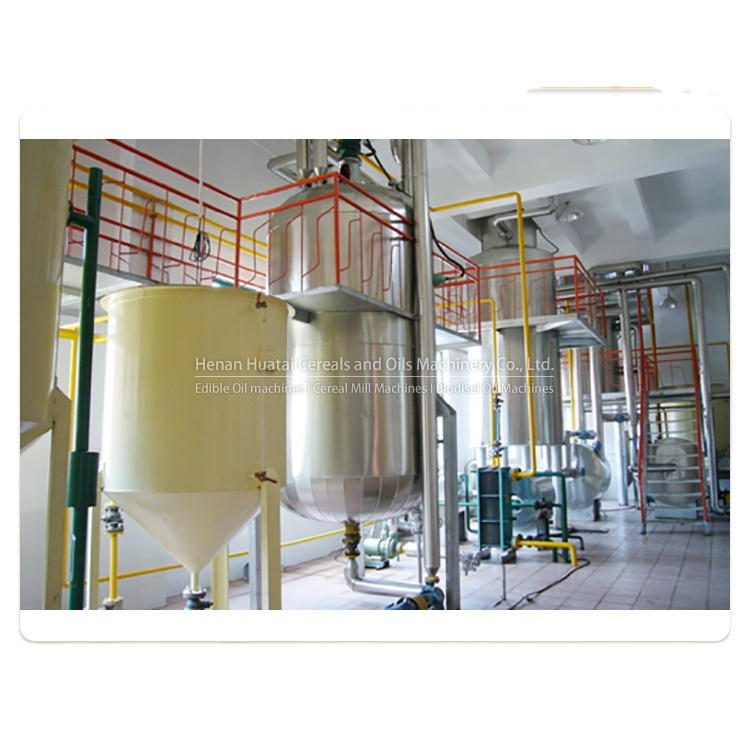
Key equipment advantages in QIE Group’s full-automation approach
QIE Group’s line integrates modular pressing with a high-efficiency refining module and is fabricated largely from 304 stainless steel to meet international food safety requirements (ISO 22000 compatible designs, CE components, optional FDA-compliant contact surfaces). Core competitive features include:
- Flexible pressing module: Rapid switch between cold and hot workflows via PLC-controlled temperature and screw-speed profiles.
- High-efficiency refining: Continuous degumming, neutralization and multi-stage bleaching with vacuum deodorization—reduces free fatty acids to <0.1% and color indexes to export-grade levels.
- Automated quality monitoring: In-line sensors for moisture, FFA and turbidity enable adaptive control and consistent batches.
- Hygiene & material safety: 304 stainless contact parts, sanitary piping and CIP-compatible design reduce contamination risks and simplify audits.
- Energy recovery: Heat exchangers and condensate recovery reduce net energy demand by up to 12% compared with conventional lines.
Process flow (typical)
A concise production flow highlights where cold vs hot decisions occur and the refining integration points:
Representative technical parameters and yield comparison
Energy consumption comparison
Values represent typical full-line energy use including refining. QIE Group’s heat recovery options can reduce hot-press energy intensity by ~8–12% in many configurations.
Market-fit and compliance — Southeast Asia, Africa, Middle East
Regional market demands shape technical choices: Southeast Asian buyers often favor neutral refined oil with consistent color for industrial and retail channels; African markets show strong demand for value-added cold-pressed oils with traceable origin; Middle Eastern importers frequently require documented HACCP and halal-compliant processing. QIE Group’s line supports:
- Traceability modules for batch records and certificates (HACCP, ISO-ready documentation).
- Optional halal-compliant segregation and cleaning programs.
- Scalable modules—from 1 t/h pilot units to 15 t/h industrial lines—allowing staged CAPEX and faster time-to-market.
Example field result: In a Southeast Asian deployment, a mid-size edible oil packer converted a mixed hot/cold workflow to a QIE Group modular line and reported a 9% increase in marketable oil after process tuning (consistent FFA <0.2% post-refining) along with a 10% reduction in refining chemical consumption due to better crude oil quality control.
Explore equipment selection and ROI scenarios
Technical teams and procurement specialists can evaluate feedstock-driven flows, expected yields and energy budgets with QIE Group’s engineering support. A short technical audit (2–4 weeks) typically produces a tailored configuration and projected payback estimate.
Explore QIE Group Fully Automatic Peanut Oil Production Line — Request Technical Pack