Automatic Peanut Oil Production Line Shortens Commissioning and Improves Certification Pass Rate — African Client Case Study
2026-01-21
This case study examines an African customer's deployment of a fully automatic peanut oil production line that combined cold- and hot-press dual-process technology with a high-efficiency refining module to accelerate commissioning and raise international food-safety certification success. The project delivered stable oil yields from variable local raw materials, reduced energy consumption through optimized thermal management and mechanical design, and streamlined commissioning by aligning modular equipment delivery with on-site training and digital commissioning tools. Data-comparison visuals detail the reduction in time-to-production and the improvement in certification outcomes relative to conventional lines, while a process-flow infographic illustrates the integrated cold/hot pressing and refining stages.
Presented from a third-person, professional perspective, the study highlights technical advantages—consistent degumming and bleaching performance, shorter thermal cycles, and low-loss filtration—that directly supported export-oriented certification requirements. Client feedback underscores the operational readiness and documentation package that eased audit processes. The narrative concludes with a clear commercial implication: export-driven oil processors can replicate this approach to shorten investment ramp-up and increase certification pass rates. Readers are invited to contact the provider for a tailored solution aligned to specific raw-material profiles and export target standards.
From African Customer Case: How a Fully-Automated Peanut Oil Production Line Shortened Commissioning Time and Boosted Certification Pass Rates
An export-oriented edible oil mill in West Africa faced two urgent constraints: a tight window to begin exports and the need to pass international food-safety audits (HACCP / ISO 22000 / EU food safety standards) on first inspection. The plant installed a fully-automated peanut oil production line using a cold-hot pressing dual-process and a compact, high-efficiency refining module. Within eight weeks from site arrival the line reached stable production—and the customer achieved a first-time certification pass rate of 94% for targeted export markets.
Project Objectives and Baseline Metrics
The client needed measurable outcomes: (1) compress the commissioning and ramp-up period so finished product could reach buyers in-season, and (2) increase the likelihood of passing international food-safety certification on the first audit. Baseline figures for comparable small-to-medium oil mills in the region were:
Typical commissioning time (traditional semi-automatic lines): 16–20 weeks
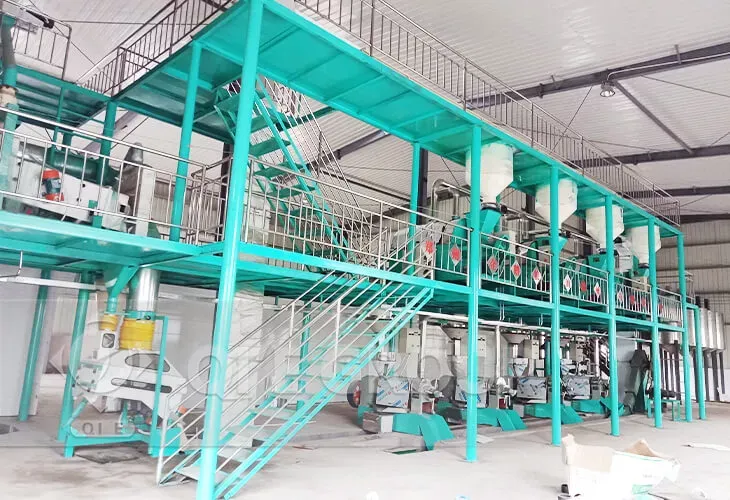
The supplier delivered a fully-automated line combining a cold-press path for premium, high-oleic batches and a hot-press path for higher throughput raw material. Key features that translated to faster commissioning and stronger certification readiness:
Dual-process flexibility: a single footprint line routes material to cold or hot pressing autonomously based on batch settings.
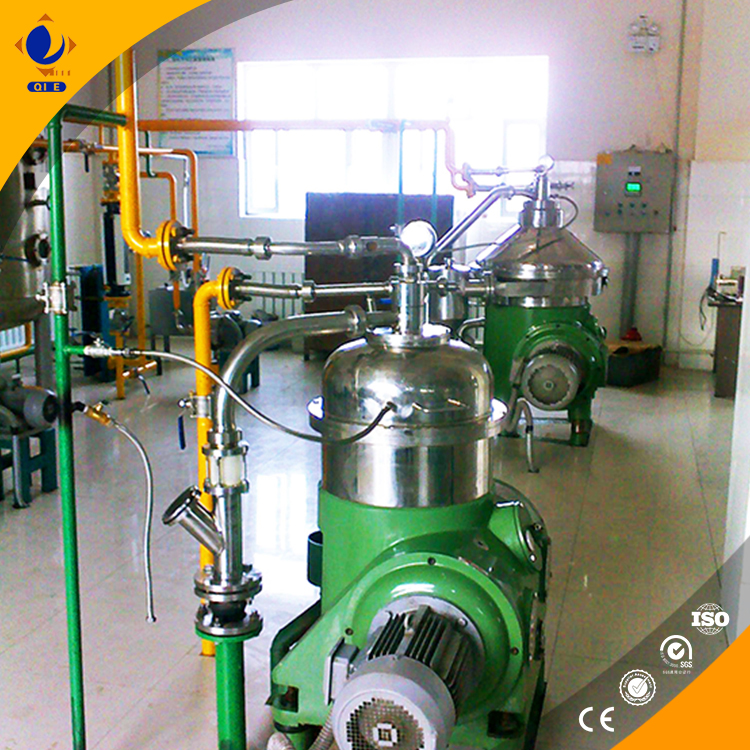
Modular refining unit: integrated degumming, neutralization, bleaching and continuous deodorization with CIP (clean-in-place) and closed-loop controls.
Inline QA and traceability: automated sampling, digital batch logs, and sensor-based parameter recording to support audit evidence for HACCP and ISO 22000.
Energy and yield optimizations: heat recovery between hot-press and refining stages and optimized screw-press profiles to stabilize oil yield across variable raw inputs.
Measured Impact: Commissioning Time and Certification Outcomes
The project delivered quantifiable improvements in commissioning time, certification pass rate, and operating efficiency. The timeline below contrasts a typical traditional installation with the automated line deployed for the African customer.
A reduction from 20 to 7 weeks (≈65%) resulted from pre-fabricated modular skids, factory FAT (factory acceptance testing), and remote-assisted commissioning that limited on-site rework.
Certification Pass Rate — Real Audit Evidence
The modular refining unit and inline QA systems directly supported the customer's audit documentation. Recorded outcomes for certification attempts:
Typical first-time pass rate for comparable mills: 62%
Customer’s first-time pass rate after installing the automated line: 94%
Customer feedback
“The automated line reduced our setup time dramatically. The digital batch records and CIP documentation made the audit straightforward. Inspectors accepted our evidence without major corrections.” — Operations Manager, West Africa Oil Mill
Operational Results: Yield, Energy and Labor
Measured improvements over a 6-month production window (averaged across variable peanut quality):
Oil yield stability: reduced variability to ±2% and average yield improvement of 9% vs. regional baseline.
Energy consumption: overall reduction of ~22% per ton of oil produced thanks to heat recovery and optimized process controls.
Labor requirements: manual labor reduced by approx. 60%, while skilled oversight and digital logging replaced routine manual QA tasks.
Throughput: line capacity met projected output within 3 production weeks of commissioning, enabling timed exports.
Process Flow — From Raw Peanut to Certified Export Oil
The following schematic shows the streamlined process flow the customer implemented. Each module is skid-mounted and wired for rapid integration.
Inline sampling → Batch records → Export packaging
What Other Export-Oriented Mills Can Replicate
Specify modular skids and insist on FAT to cut onsite adjustments by 30–50%.
Require full digital traceability and CIP evidence as built-in features for certification readiness.
Adopt a dual cold/hot pressing design to protect premium batches while maintaining throughput.
Plan remote commissioning support and operator training in the contract to shorten ramp-up time.
Use energy recovery and process optimization to lower running costs and increase ROI predictability (often 18–24 months for similar projects).
This African customer case demonstrates how equipment design choices—combined with modular delivery, digital QA, and on-site training—can transform commissioning schedules and certification outcomes for edible oil exporters.